Months earlier, my mother had complained that someone kept leaving the side entrance unlocked. My father blamed me. I blamed him. Eventually, my mother bought two inexpensive motion cameras.
One faced the kitchen entrance.
The other had been placed on a narrow shelf overlooking the downstairs hall.
Everyone forgot about it.
Or almost everyone.
My father had unplugged the downstairs receiver weeks before because its status light bothered him at night.
What he apparently did not realize was that the camera itself also recorded locally whenever it detected motion.
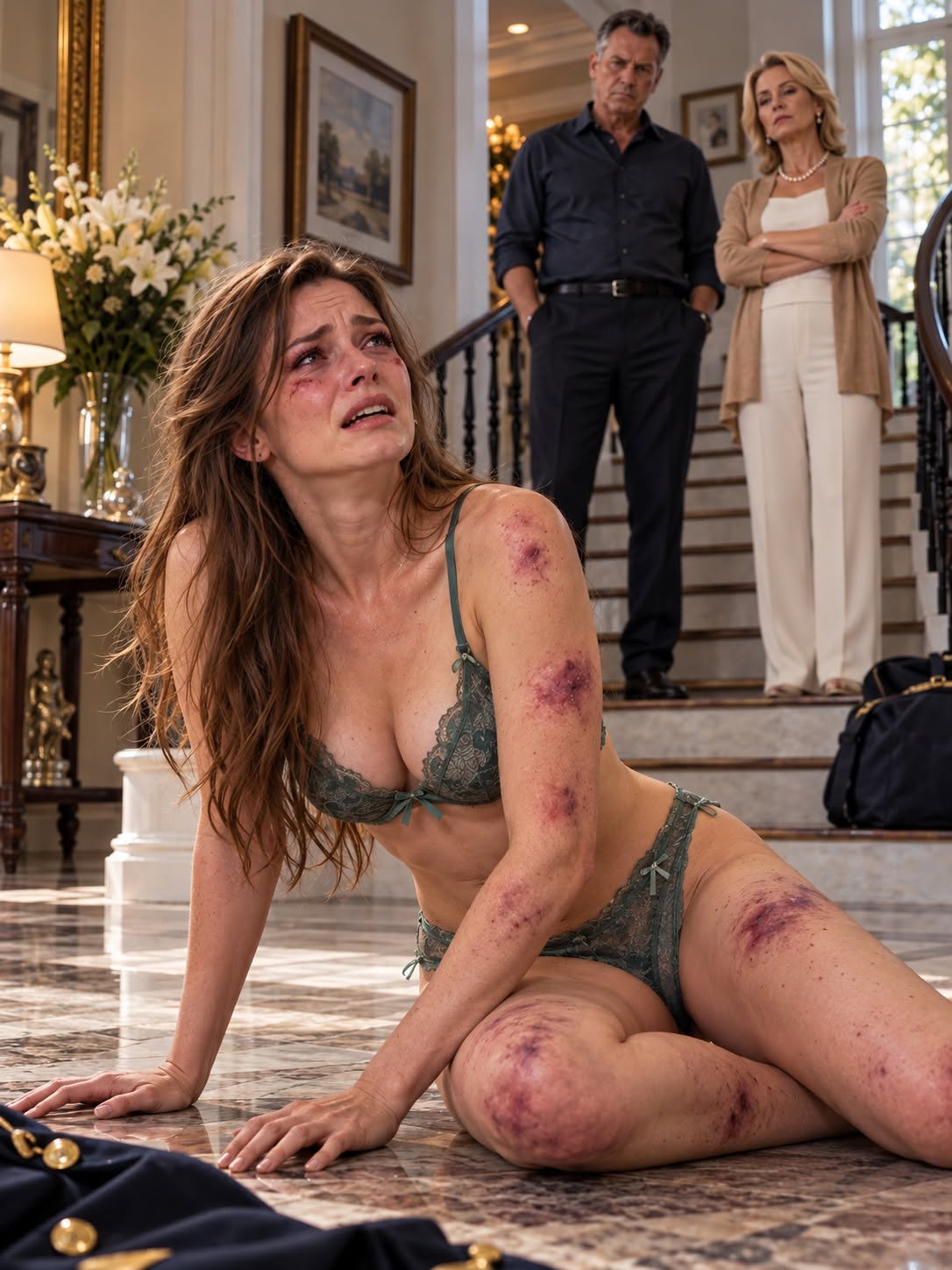
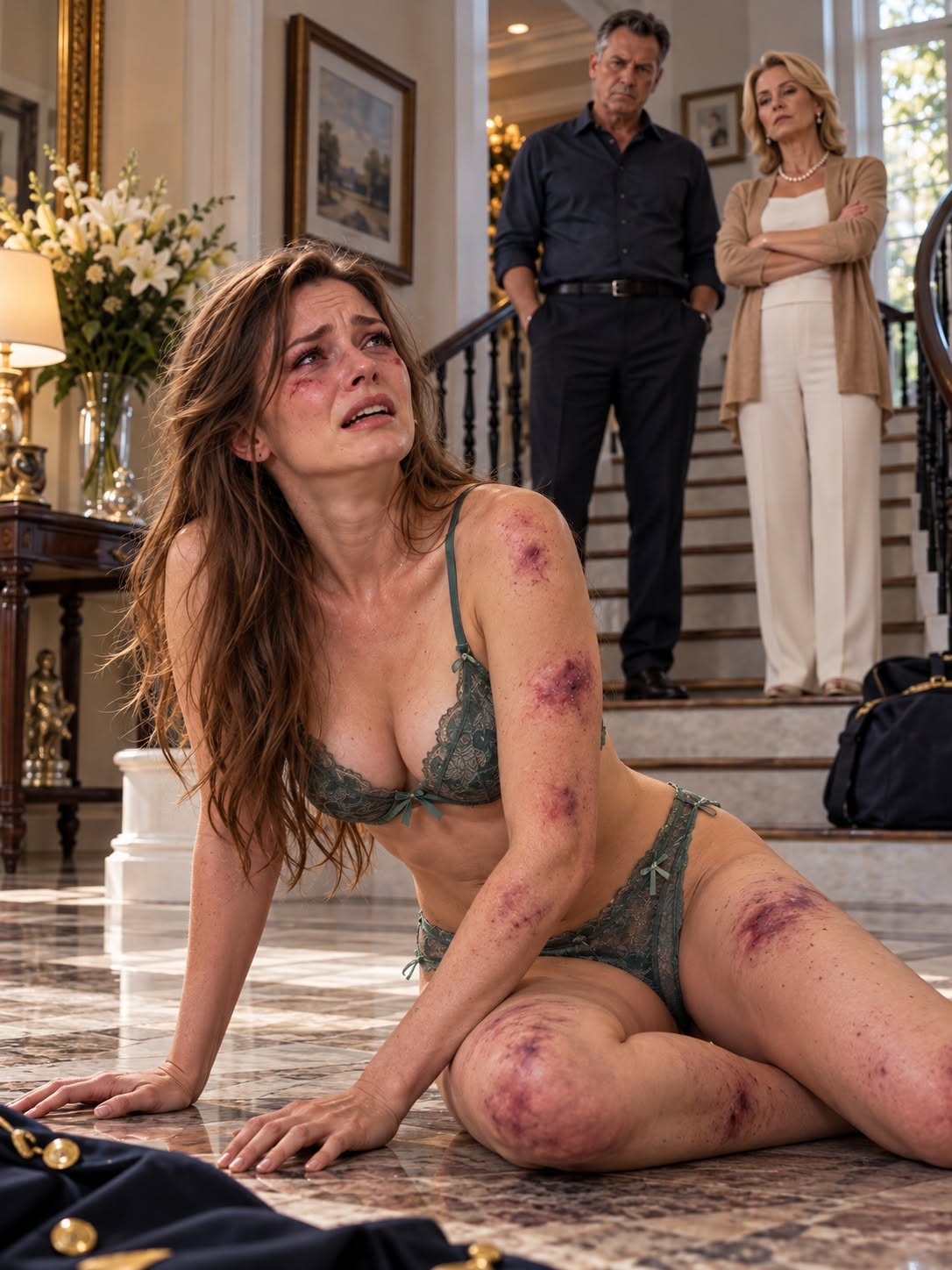
During everything that happened on the staircase, the small camera had been knocked from its shelf. The outer housing shattered when it hit the floor, and the memory module slid beneath the edge of the bottom step.
My parents had cleaned nothing because there had been no time.
They had assumed there was nothing to clean.
Detective Keller had noticed the missing device because of a rectangle of dust on the shelf.
Then he found the casing.
Then the card.
My father knew exactly what it might contain.
By the time I heard any of this, I was staring at a hospital ceiling.
My first clear memory after the ambulance was the sound of shoes in the corridor.
Hospital shoes have a particular rhythm at four in the morning. Nurses move briskly. Doctors move deliberately. Families move uncertainly.
I had spent years learning to identify footsteps in military hallways, to tell instructors from candidates before they rounded a corner.
But that morning, every set of footsteps made me think of my father.
I kept looking toward the door.
A nurse named Naomi noticed.
“You expecting someone?” she asked.
I hesitated.
“No.”
She adjusted the blanket.
“That sounded like a yes.”
“My commissioning is this morning.”
She stopped.
“What time?”
“Sunrise.”
Her eyes moved to the clock.
5:12.
I turned my head toward the window.
The sky beyond the blinds was beginning to lose its darkness.
“Looks like I missed it.”
Naomi was quiet for a moment.
Then she asked, “Does missing the ceremony mean you lose the commission?”
“I don’t know.”
That was the truth.
I had spent years preparing for every contingency I could imagine.
Academic setbacks.
Fitness injuries.
Administrative delays.
Failed inspections.
Leadership evaluations.
I had contingency plans for everything.
I had never created one for waking in a hospital less than two hours before I was supposed to stand on a parade ground while my parents were questioned by police.
The absurdity of it almost made me laugh.
Instead, I cried.
Quietly.
I turned my face toward the wall because crying felt like one more thing I did not have time for.
Naomi pretended not to notice until I was ready to speak again.
“I worked so hard,” I whispered.
“I believe you.”
“You don’t even know me.”
“No,” she said. “But people don’t usually argue with a hospital clock at five in the morning unless something matters to them.”
That earned the smallest smile from me.
She left.
Twenty minutes later, someone else entered.
Major Rebecca Sloan.
My training supervisor.
Her uniform was immaculate.
Her expression was not.
She had obviously dressed quickly, and although Major Sloan could normally make a room feel organized simply by standing inside it, that morning she looked worried.
I attempted to sit straighter.
Pain stopped me.
“Ma’am.”
“Don’t do that.”
“I’m sorry.”
“Don’t apologize either.”
She moved the visitor’s chair closer.
For several seconds, she simply looked at me.
Then she exhaled.
“When you didn’t report, Captain Ellis called your phone.”
“My phone is probably still at the house.”
“He called twice. Then he called your emergency contact.”
My stomach tightened.
“My parents?”
“Yes.”
“What did they say?”
“They didn’t answer. The police did.”
I looked away.
Major Sloan leaned forward.
“You do not need to tell me anything you aren’t ready to tell me.”
“Am I done?”
“With what?”
“My commission.”
The question came out smaller than I intended.
For years, Major Sloan had trained me not to ask questions I could answer myself.
This one I could not.
She shook her head.
“No.”
I looked back at her.
“No?”
“You completed the requirements. The ceremony is ceremonial. The oath matters. The paperwork matters. Your qualification matters. Standing on one particular square of pavement at one particular hour is not what made you ready.”
“But the Commandant—”
“Already knows.”
My throat tightened.
“What did he say?”
“He said we adjust.”
I almost laughed again.
Of course he had.
That was what soldiers did.
Conditions changed.
You adjusted.
Major Sloan reached into a folder.
Inside were documents.
“You will not be going to the parade ground.”
I swallowed.
“But if the physician approves, Colonel Mercer can administer the oath here.”
I stared at her.
“Here?”
“Here.”
“In a hospital room?”
“If necessary.”
I looked at my hands.
There were faint marks where I had gripped the uniform garment bag.
“My uniform is at the house.”
“We know.”
For the first time, something almost resembling amusement appeared in her eyes.
“Captain Ellis retrieved it with police permission.”
I blinked.
“He what?”
“He was very protective of the crease.”
Despite everything, I laughed.
It hurt.
I laughed anyway.
Major Sloan smiled.
“There you are.”
At 6:41 that morning, while my classmates stood on the parade ground beneath a pale gold sky, six people gathered inside my hospital room.
Major Sloan.
Captain Ellis.
Naomi.
Colonel Mercer.
A hospital administrator who had somehow become emotionally invested in the whole situation.
And my closest friend from training, Lena Ortiz, who arrived carrying my uniform jacket over both arms as though transporting something sacred.
Several buttons were missing.
One sleeve was wrinkled.
There was a small tear near the hem.
Lena’s eyes filled when she saw me looking at it.
“I tried.”
“It’s perfect.”
“It is absolutely not perfect.”
“It made it.”
She understood what I meant.
So did I.
Colonel Mercer stood beside the bed.
There was no music.
No formation.
No flags moving in the morning wind.
No family sitting in folding chairs.
Nothing looked the way I had imagined.
And somehow, in that moment, none of that mattered.
“Ready?” he asked.
I glanced at Major Sloan.
Then at Lena.
Then toward the window.
The first sunlight had reached the hospital wall.
“Yes, sir.”
I raised my right hand.
My voice shook on the first sentence.
It steadied on the second.
By the final words, I sounded like myself again.
Colonel Mercer lowered his hand.
“Congratulations, Lieutenant.”
Everyone clapped softly.
Naomi cried openly.
The hospital administrator cried harder than Naomi.
Lena bent over the bed and whispered, “You stubborn idiot.”
“You’re ruining the dignity of the occasion.”
“Your dignity survived worse.”
Major Sloan opened a small box.
Inside were my bars.
I stared at them.
For years, I had imagined my parents pinning them on me.
My mother had once promised she would.
That memory hurt more than I expected.
Major Sloan seemed to understand without asking.
“Would you like Ortiz to do it?”
I nodded.
Lena carefully attached them to the damaged uniform jacket and held it where I could see.
“There,” she said.
I looked at the insignia.
Something inside me shifted.
Not healed.
Not resolved.
Just shifted.
For the first time, the commission felt like mine rather than something I needed my father to acknowledge.
That realization frightened me.
It also freed something I had been holding for years.
After everyone left, Detective Keller arrived.
He was in his late forties, with tired eyes and the calm manner of someone who had learned that frightened people usually remembered more when they were not rushed.
He introduced himself and asked if I felt well enough to speak.
“I think so.”
“If you get tired, we stop.”
I nodded.
He took out a notebook but did not immediately open it.
“First, I want you to know that we recovered evidence from the house.”
My fingers tightened around the blanket.
“What evidence?”
He studied me.
“A recording device.”
I frowned.
“We don’t have a recording device.”
“You did.”
He explained the camera.
Memory returned slowly.
My mother standing in the kitchen months earlier, complaining about the unlocked door.
A small cardboard box.
My father muttering that the cameras were unnecessary.
Me balancing on a chair to position one.
Then forgetting it existed.
“Does it show what happened?”
“We’re still reviewing it.”
That answer told me enough.
Keller continued.
“Your parents gave different accounts.”
My stomach sank.
“What did they say?”
“Your father said you were leaving after an argument and lost your footing.”
I closed my eyes.
“And my mother?”
“That she entered the hallway after you fell.”
The laugh came back to me.
Maybe now you’ll finally understand where you belong.
I opened my eyes again.
“She was there.”
“I know.”
I stared at him.
“You know?”
He nodded.
“The audio is clearer than the picture.”
A strange stillness settled over me.
I had spent my whole life wanting someone outside our family to hear what happened inside it.
Not only that night.
All the smaller moments.
The comments disguised as jokes.
The rules that changed without warning.
The way every success became evidence that I thought I was better than them.
The way independence was treated like betrayal.
Now someone finally had heard.
And I discovered that being believed did not feel triumphant.
It felt exhausting.
Keller must have seen that.
“You don’t have to decide how you feel today.”
“I thought I would feel relieved.”
“You might later.”
“What happens to them?”
“That depends on several things.”
I looked toward the window.
“Are they in custody?”
“Your father is being held while the investigation continues. Your mother was released pending further review.”
Something inside me recoiled.
“Released?”
He remained calm.
“She has been instructed not to contact you.”
I nodded, though I was not certain whether the movement meant understanding or fear.
Then he opened his notebook.
“Can you tell me what you remember?”
So I did.
Not dramatically.
Not perfectly.
Memory rarely arrives in perfect order.
I told him about the argument.
My father’s words.
My mother’s expression.
The uniform falling.
The buttons striking the hardwood.
The sound more than anything.
Tiny metallic clicks bouncing down the stairs.
When I finished, Keller closed the notebook.
“There’s something else.”
I looked at him.
“The camera recorded before the incident too.”
“How long before?”
“About forty minutes.”
My heartbeat changed.
“What was happening?”
“Your parents were talking.”
I knew immediately that I did not want to hear it.
I also knew I had to.
“About me?”
“Yes.”
Keller paused.
“They believed you intended to disappear after commissioning.”
I stared at him.
“What?”
“Your father repeatedly said that once you received your commission, you would cut contact permanently.”
“I never said that.”
“I understand.”
“I was being stationed two states away. That’s all.”
He nodded.
“Did anyone tell them you planned to end contact?”
“No.”
“Did you write anything that could have been interpreted that way?”
I almost said no again.
Then I remembered.
A letter.
Not to my parents.
To Lena.
Months earlier, after another argument, I had written that maybe distance was the only way I would ever learn who I was without constantly defending myself.
I had printed it because Lena had a habit of keeping real letters.
The next morning, the envelope disappeared from my desk.
I assumed I had misplaced it.
My mouth went dry.
“There was a letter.”
Keller listened.
I explained.
“Could your parents have found it?”
“Yes.”
“Would it have sounded like you planned to abandon them?”
“To someone already afraid of that? Maybe.”
He wrote something down.
That did not excuse anything.
But for the first time, the shape of the night became more complicated.
Not better.
Not acceptable.
Just understandable in a way that frightened me differently.
My father had not exploded because of one argument.
He had been building a story in his mind for months.
A story in which my success meant his rejection.
A story in which my leaving meant I did not love him.
A story he had apparently never asked me to confirm.
“What else was on the recording?” I asked.
Keller hesitated.
Then he said, “Your mother tried to convince him to let you go.”
I stared at him.
“No.”
“She did.”
“That doesn’t make sense.”
“People don’t always behave consistently.”
“She laughed at me.”
“I know.”
“She stood there.”
“I know.”
“Then why would she defend me before?”
Keller closed the notebook again.
“That may be a question only she can answer.”
After he left, I remained awake for hours.
I kept replaying the idea.
My mother defending me.
My mother laughing.
Both things being true.
I did not know what to do with that.
Three days later, I received a letter.
Not from either parent.
From my younger brother, Daniel.
Daniel was twenty-three and lived across the country. He had left home at eighteen and rarely visited.
My father always said Daniel was irresponsible.
My mother said he was selfish.
I had believed some of it.
The letter was only two pages.
The first page was ordinary.
He had heard what happened.
He hoped I was recovering.
He was sorry he could not arrive sooner.
The second page changed everything.
There is something you need to know about Dad.
I read the line twice.
Then continued.
He did the same thing to me, only differently.
I stopped breathing for a moment.
Daniel wrote that when he received an internship in Seattle, our father had hidden the acceptance letter for almost two weeks.
By the time Daniel found it, he had nearly missed the deadline.
I had never known.
There was more.
Dad didn’t want me to fail. That’s the part I didn’t understand until years later.
He wanted me close.
He thought those were the same thing.
I lowered the page.
Outside my hospital window, late afternoon sunlight moved across the parking structure.
I thought about every story I had heard about Daniel.
The irresponsible son.
The selfish son.
The son who left.
Maybe those stories had never belonged to Daniel at all.
Maybe they belonged to the people who needed to explain why he had gone.
The final paragraph made my hands shake.
Mom helped me find the letter.
She told me to go.
And she made me promise never to tell Dad she helped.
I stared at the words.
My mother had helped Daniel leave.
Years ago.
Secretly.
The woman who had laughed at the bottom of the staircase had once quietly helped my brother escape the same fear that had shaped our house.
Why?
What had changed?
Or had nothing changed at all?
Maybe my mother had always been two people inside that marriage.
The woman who knew what was right.
And the woman who was too afraid of losing everything to consistently do it.
That evening Major Sloan visited again.
I handed her Daniel’s letter.
She read it slowly.
“Complicated,” she said.
“That seems to be the family motto.”
She gave it back.
“Does it change what you want?”
“I don’t know what I want.”
“That’s allowed.”
“I spent years thinking commissioning would answer everything.”
“What did you think it would answer?”
I looked at my new bars resting on the table beside the bed.
“Who I was.”
“And?”
“It turns out I’m still me.”
Major Sloan smiled faintly.
“That’s usually how it works.”
Before she left, she stopped at the doorway.
“One more thing.”
“What?”
“Your orders.”
I had almost forgotten.
My original assignment was scheduled to begin after a short recovery and administrative period.
She placed an envelope on the table.
“Nothing has changed unless you request a change.”
I looked at it.
Two states away.
A new city.
A new unit.
A life outside my parents’ house.
For years, leaving had felt like the ultimate act of defiance.
Now it suddenly felt like something quieter.
A decision.
My decision.
After Major Sloan left, I opened the envelope.
Then my phone rang.
It was Daniel.
The first thing he said was, “Please don’t hang up.”
“I wasn’t going to.”
“You might after I tell you this.”
I sat a little straighter.
“What happened?”
“I found something.”
“What?”
“When I left home, Mom gave me a box. Old photos, school papers, random stuff. I never really went through it.”
He paused.
“I opened it tonight.”
My stomach tightened.
“And?”
“There are letters in here.”
“From who?”
“Mom.”
“To you?”
“No.”
His voice lowered.
“They’re addressed to us.”
I frowned.
“What do they say?”
“I haven’t read all of them.”
“Daniel.”
“I know. But there’s one from six years ago.”
Six years.
Before either of us fully understood what our family had become.
“What does it say?”
He inhaled.
“She says she’s sorry.”
“For what?”
A long silence.
Then Daniel answered.
“For letting Dad believe that keeping us close was the same thing as loving us.”
I closed my eyes.
But Daniel had not finished.
“There’s something else.”
“What?”
“At the bottom she wrote that one day, if either of us ever managed to leave, she hoped we would come back for her.”
I opened my eyes.
The room suddenly felt very still.
My mother had never asked me for help.
Not once.
And now, for the first time, I wondered whether the truth Detective Keller had found on that memory card was only the beginning.
-END OF PART 2, –PRESS NEX PART IN BOTTOM OF PAGE TO READ NEXT PART
Daniel arrived two days later carrying the box.
It was smaller than I expected.
Brown cardboard.
Faded tape.
My mother’s handwriting across the top.
FAMILY.
One word.
Nothing more.
Daniel placed it on the chair beside my hospital bed and sat down.
For several seconds, neither of us touched it.
He looked older than I remembered.
Not physically older exactly.
More settled.
When he had left home, I had thought of him as reckless. He moved too quickly, changed jobs twice, relocated without consulting anyone, and rarely explained himself.
Now I wondered how much of what I had called recklessness had actually been urgency.
“How are you?” he asked.
“Everyone keeps asking me that.”
“It’s because nobody knows what else to say.”
“I don’t know what to say either.”
He looked at the box.
“Then we don’t have to say anything.”
That was new.
In our family, silence had never been comfortable.
Silence meant someone was angry.
Or disappointed.
Or waiting for you to explain yourself.
With Daniel, silence simply existed.
After a while, I asked, “Why didn’t you tell me?”
“About Dad hiding the internship letter?”
“Yes.”
He rubbed his hands together.
“I tried once.”
“When?”
“Your second year of training.”
I frowned.
“I don’t remember.”
“You were home for three days. Dad and you were actually getting along. You were talking about field exercises at dinner. He looked proud.”
Daniel shrugged.
“I didn’t want to ruin it.”
“You wouldn’t have ruined anything.”
“I thought I would.”
I looked toward the window.
The truth was uncomfortable.
If Daniel had told me then, I might not have believed him.
Or worse, I might have believed him and defended our father anyway.
Dad was scared.
Dad didn’t mean it that way.
Dad just worries.
We had an entire family language built around translating control into concern.
“I’m sorry,” I said.
Daniel studied me.
“For what?”
“For believing everything they said about you.”
A small smile touched his face.
“You were seventeen when I left.”
“Still.”
“You were surviving the same house.”
“I didn’t know I was surviving anything.”
“Neither did I.”
He opened the box.
Inside were photographs, report cards, birthday cards, a broken watch, old ribbons from school events, and several envelopes tied with blue string.
Daniel lifted them carefully.
“They’re numbered.”
There were eight.
One for every year since he had left.
None had ever been mailed.
The first was addressed to Daniel.
The second to both of us.
The later letters alternated.
My mother had written them quietly and hidden them among old family belongings.
Daniel handed me the oldest.
I unfolded it.
Her handwriting was familiar enough to hurt.
Daniel,
Your father is angry that you left.
I am angry too, but I think some of my anger is envy.
You did something I never learned how to do.
You chose your own future.
I stopped.
Daniel looked at me.
“Keep going.”
I did.
She wrote about marrying young.
About my father’s certainty, which had once made her feel safe.
Victor always knew which route to drive, which bills to pay first, which neighborhood to live in, which schools were best.
For someone raised in a chaotic household, certainty felt like love.
Over time, she wrote, I stopped noticing when certainty became authority.
That sentence stayed with me.
It was not an excuse.
My mother did not ask to be excused.
In fact, she wrote the opposite.
I let him make too many decisions because it was easier than making my own. Then I became angry that no one asked what I wanted. That was not fair to him, and it was not fair to myself.
The next letter was written two years later.
That one mentioned me.
I worry about your sibling.
Victor talks about the military as though it is temporary.
I think he truly believes the commission won’t happen.
I don’t know what he’ll do when it does.
I stopped again.
Daniel stood and walked toward the window.
“She knew.”
“Yes.”
“She knew years ago.”
My first reaction was anger.
Then confusion.
Then something harder to name.
“If she knew, why didn’t she warn me?”
Daniel looked back.
“Maybe she thought she could manage him.”
“That worked well.”
“I didn’t say she was right.”
I put the letter down.
My mother had seen the problem.
Named it.
Written about it.
Then continued living inside it.
That was more difficult for me to understand than ignorance.
If she had not understood what my father was doing, I could explain her choices.
But she had understood.
At least sometimes.
Daniel handed me another letter.
This one had been written eleven months earlier.
I don’t think Victor hates the military.
I think he hates the idea that our children have built lives in which he is no longer necessary.
That was the sentence Detective Keller later said mattered most to him.
Not legally.
Humanly.
Because it matched what the camera had recorded before the staircase.
My father had not been talking about prestige or danger or military policy.
He had been talking about abandonment.
“They won’t need us,” he said on the recording.
My mother answered, “They’re not supposed to need us forever.”
“That’s easy for you to say.”
“No, Victor. It isn’t.”
Keller played only a short section for me several days after Daniel arrived.
I had requested to hear it.
I regretted the decision almost immediately.
Not because my father’s voice frightened me.
Because it sounded ordinary.
That was the hardest part.
There was no villain’s voice.
No obvious madness.
Just my father sounding tired in his own home.
“I gave everything to this family,” he said.
My mother answered quietly.
“So did I.”
“And now they leave.”
“They grow up.”
“Same thing.”
“No.”
A chair moved.
Then my father said, “Daniel left. Now this one leaves.”
My mother’s reply came after a long pause.
“If we make leaving feel like betrayal, Victor, they won’t come back.”
The recording ended there.
I sat with Keller in silence.
“You were right,” I said.
“About what?”
“She tried.”
“Yes.”
“Then later she…”
I could not finish.
He understood.
“People can know the right thing and still fail to do it.”
“That’s not very comforting.”
“It wasn’t meant to be.”
Detective Keller never spoke to me like I was fragile.
I appreciated that.
“What happens now?”
“The prosecutor will review the evidence.”
“With my mother too?”
“Yes.”
I looked down.
“I don’t want to destroy their lives.”
Keller leaned back.
“You don’t control that process.”
“I know.”
“But you do control how much contact you want, what boundaries you need, and whether you participate in any restorative or mediated process later.”
“Mediated?”
“If appropriate. Much later.”
I looked at him.
“Do people actually do that?”
“Sometimes.”
“Does it help?”
“Sometimes.”
That was Keller’s favorite word.
Sometimes.
Not always.
Not never.
Just the uncomfortable middle where most real life seemed to happen.
My recovery progressed better than I feared.
There was no catastrophic spinal injury, despite my terror on the stairs. I had severe bruising, a fractured wrist, and an injury to my lower back that required careful rehabilitation, but doctors expected a strong recovery.
My first steps with the physical therapist were humiliatingly slow.
Three feet.
Rest.
Five feet.
Rest.
Seven feet.
The therapist, Marcus, refused to let me compare recovery to military conditioning.
“This isn’t a fitness test.”
“Everything is a fitness test.”
“No.”
“Spoken like someone who never had Major Sloan timing push-ups.”
He grinned.
“Today the goal is the door.”
The door was twelve feet from my bed.
I looked at it.
“I can make twelve.”
“That’s not the same as needing to.”
There was a lesson hidden there.
I disliked it immediately.
My entire adult life had been structured around endurance.
If you could keep going, you kept going.
If you could stand, you stood.
If you could perform, you performed.
Recovery demanded something else.
Patience.
And patience felt suspiciously like surrender until I learned the difference.
One afternoon, when I reached the door and returned without assistance, Lena applauded from the hallway.
“Stop.”
“I refuse.”
“People are watching.”
“Good. They should appreciate greatness.”
Lena had become my unofficial guardian.
She brought paperwork.
Food.
Gossip from the unit.
She also brought silence when I needed it.
One afternoon she found me reading my mother’s letters.
“You’ve been on that page ten minutes.”
“I know.”
“What does it say?”
I handed it to her.
The letter was dated four months before my commissioning.
My mother wrote:
I practiced telling Victor that I would go to the ceremony whether he approved or not.
I practiced in the car.
I practiced in the grocery store.
I practiced while folding laundry.
Every time I imagined saying it aloud, I felt ridiculous because it should not be difficult for a grown woman to tell her husband where she intends to be.
But it is difficult.
I don’t know when that happened.
At the bottom:
I bought something for the ceremony.
I hid it in the blue sewing box.
Lena looked up.
“What’s in the sewing box?”
“I don’t know.”
“Do you still have access to the house?”
“Police returned some belongings. The rest are being handled later.”
“Ask Daniel.”
So I did.
Daniel went with Keller to retrieve permitted personal items.
He returned carrying the sewing box.
Blue metal.
White flowers painted on the lid.
I remembered it from childhood.
My mother had repaired Halloween costumes from that box.
School uniforms.
Loose buttons.
Prom clothes.
Daniel placed it on my lap.
“Ready?”
“No.”
He sat beside me.
“Me neither.”
I opened it.
Thread.
Needles.
Measuring tape.
Old fabric.
Underneath everything was a small velvet box.
My throat tightened.
Inside was a silver pin.
Not military.
A simple compass.
On the back, engraved in tiny letters:
GO WHERE YOUR LIFE CALLS YOU.
Daniel stared at it.
“She bought that for you.”
I nodded.
“She was going to give it to you at commissioning.”
I nodded again.
For several minutes I could not speak.
Finally I said, “I don’t understand her.”
Daniel’s voice softened.
“I don’t think she understood herself.”
Three weeks after the incident, my mother asked through an attorney whether I would accept a letter.
No phone call.
No visit.
No message passed through relatives.
Just a letter.
I almost refused.
Then I remembered the eight letters in Daniel’s box.
All the things she had been able to write but not say.
I accepted it.
Her opening sentence surprised me.
I am not writing to ask you to forgive me.
I read on.
I failed you.
I knew your father was afraid of losing you. I told myself I could keep him calm. I told myself I could prevent things from becoming worse. I spent years believing that if I said the right thing at the right time, I could keep everyone together.
That night, when I saw you on the stairs, something inside me broke.
You called for me.
I should have called for help immediately.
Instead, I laughed.
I have replayed that moment more times than I can describe.
I wasn’t laughing because you were hurt.
I was laughing because I was terrified and because for one terrible second I heard myself becoming the person I had spent years pretending I wasn’t.
I know that explanation does not erase what you experienced.
I put the letter down.
My chest hurt.
Not physically.
Some injuries did not appear on scans.
I continued.
Your father needs help.
So do I.
For years I thought helping him meant keeping him comfortable.
I understand now that sometimes helping someone means refusing to participate in what they are doing.
I should have learned that before you paid the price for my silence.
At the end:
If you never want a relationship with me again, I will respect that.
But for the first time in my adult life, I am going to learn how to make decisions because they are right, not because they keep someone from being upset with me.
I hope one day you will know I meant that.
Mom.
Daniel read it after I finished.
“What do you think?”
“I don’t know.”
“That seems to be happening a lot.”
I almost smiled.
The legal process moved quietly.
My father accepted responsibility for his actions rather than forcing a long factual dispute over what the recording showed. His attorney informed the prosecutor that he was willing to comply with counseling, no-contact restrictions, and whatever disposition the court considered appropriate.
That surprised me more than anything.
The man I knew argued about parking tickets.
He once spent forty minutes proving a restaurant bill was wrong by three dollars.
Yet now, when denial would have been his most familiar instinct, he did not deny.
A week later Keller told me why.
My father had watched the recording.
Not just the final moments.
All of it.
He watched himself pacing the hallway.
He listened to his own words.
He watched my mother trying to calm him.
He watched me enter carrying my uniform.
Then he watched what followed.
“He asked me to stop it halfway through,” Keller said.
“And?”
“I stopped it.”
“What did he say?”
Keller hesitated.
“That he had spent years telling himself he was protecting his family.”
I looked at him.
“And then?”
“He said he couldn’t recognize the man on the screen.”
I waited for satisfaction.
None came.
Only sadness.
My father was still my father.
The man who taught me to ride a bicycle by running beside me until he nearly collapsed.
The man who drove four hours when my car broke down freshman year.
The man who taught me to check the oil, negotiate rent, and never sign paperwork I had not read.
He was also the man on the staircase.
Both were true.
That was the part no one prepares you for.
Healing would have been easier if all good memories had suddenly become false.
They did not.
A month after commissioning, I was medically cleared for light duty.
My assignment remained available.
I stood outside the rehabilitation center holding the compass pin.
Major Sloan was beside me.
“You can request a delay,” she said.
“I know.”
“No one will think less of you.”
“I know.”
“You keep saying that like you’re trying to convince yourself.”
I looked at her.
“Am I ready?”
“For the assignment?”
“Yes.”
She thought before answering.
“Physically, the doctors say you will be.”
“And otherwise?”
“That isn’t for me to decide.”
I looked at the road.
For years, leaving home had been about proving something to my father.
That he could not control me.
That his expectations did not define me.
That I could succeed without permission.
But standing there, I realized I no longer wanted my choices to be reactions to him.
Not staying.
Not leaving.
Not succeeding.
Not failing.
I wanted a life that belonged to me even when he was not part of the decision.
“I’m going,” I said.
Major Sloan nodded.
“Good.”
“You’re not going to ask whether I’m sure?”
“No.”
“Why?”
“Because you didn’t sound like you were asking permission.”
Two evenings before I left for my assignment, another envelope arrived.
This one was from my father.
I held it for almost an hour before opening it.
There were only four paragraphs.
No explanations.
No defense.
No request that I understand.
The first line read:
I spent your whole life preparing you to be strong, then became angry when you became strong enough to leave me.
I stopped.
Daniel, sitting across the room, watched quietly.
I continued.
Your mother told me many times that I was confusing love with being needed.
I did not listen.
When Daniel left, I decided he was ungrateful because that was easier than admitting he had grown into someone I could no longer direct.
When you chose the military, I told myself I was worried about you.
Sometimes I was.
Sometimes I was simply afraid.
The final paragraph was hardest.
I will not ask you to forgive me.
I will do the work I should have done years ago.
If you ever choose to speak to me again, I hope I will have learned how to listen without deciding what your answer should be.
Dad.
There was something folded behind the letter.
A photograph.
Me at nine years old.
Standing in our backyard in an oversized toy soldier helmet, saluting badly.
My father crouched beside me, laughing.
On the back, in his handwriting from years ago:
Future commander.
I stared at it until the words blurred.
Daniel sat beside me.
“He was proud of you.”
“I know.”
“He was afraid too.”
“I know.”
“Those things can exist together.”
I looked at my brother.
“When did you get so wise?”
“Seattle.”
“Of course.”
He smiled.
The next morning, I packed.
Uniforms.
Books.
Medical paperwork.
The compass pin.
My mother’s letters.
My father’s photograph.
Not because everything was forgiven.
It wasn’t.
Not because I wanted to return to the family we had been.
I didn’t.
I packed them because they were part of the truth.
And I was finally learning that truth did not become safer by making it simpler.
As Daniel helped me carry the final bag toward the car, Detective Keller called.
“I thought you’d want to know,” he said.
“Know what?”
“Your mother has moved out.”
I stopped beside the car.
“Moved out where?”
“She rented a small apartment across town.”
I leaned against the door.
“Does Dad know?”
“Yes.”
“What did he do?”
“Nothing.”
Nothing.
From my father, that might have been the biggest change of all.
Keller continued.
“She also asked her attorney to send you something.”
“What?”
“A copy of a lease.”
“Why?”
“She wants you to see that your name isn’t on it.”
I frowned.
“I don’t understand.”
“She said you once told her you were afraid that if you left, she’d expect you to rescue her.”
I remembered saying that during my statement.
I had forgotten.
Keller said, “She wants you to know she’s not asking you to.”
For a long moment, I could not answer.
My mother had once written that she hoped one of us might come back for her.
Now, when we finally could have, she had chosen to walk out on her own.
Daniel stood across the car, watching my expression.
“What?” he mouthed.
I covered the phone.
“Mom left Dad.”
His eyebrows rose.
Keller said one last thing before hanging up.
“There is something else.”
My grip tightened around the phone.
“What?”
“Your mother gave us another letter.”
“For me?”
“No.”
“Daniel?”
“No.”
“Then who?”
Keller paused.
“Your father.”
I looked at Daniel.
“What does it say?”
“I don’t know. She sealed it.”
“Then why are you telling me?”
“Because she wrote the date on the envelope.”
“What date?”
Keller answered.
“The day before your commissioning.”
I felt a chill move through me.
My mother had written my father a letter before the staircase.
Before the investigation.
Before the camera was discovered.
Before consequences forced anyone to reconsider anything.
And whatever was inside that envelope might reveal what she had intended to do before our family finally broke open.
-END OF PART 3–PRESS NEX PART IN BOTTOM OF PAGE TO READ NEXT PART